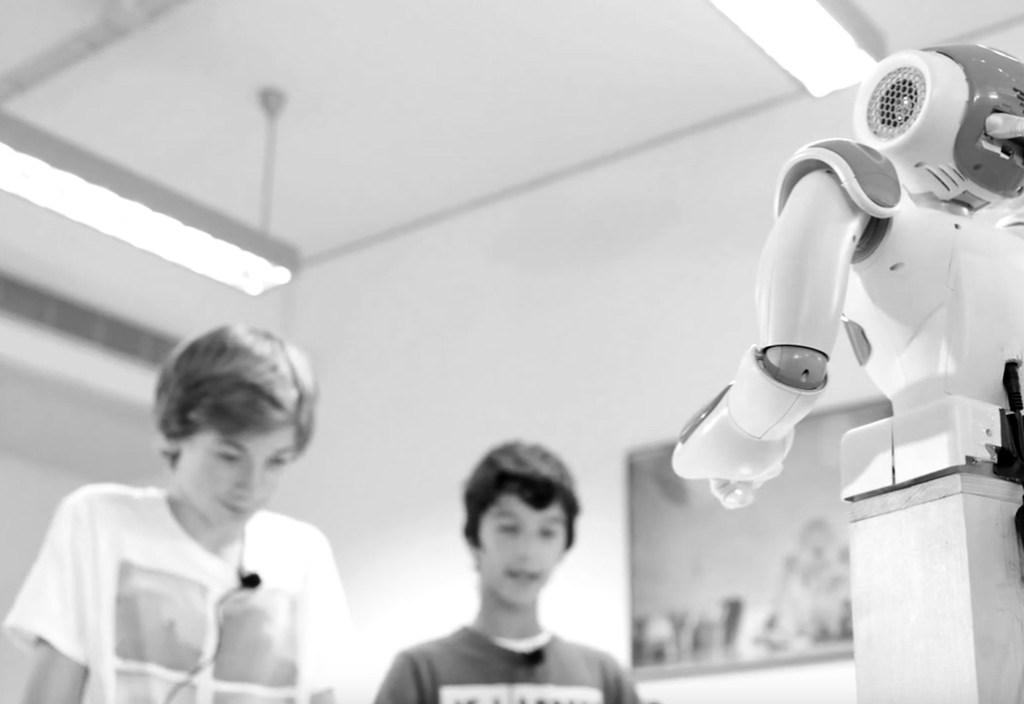
(Artificial) Social Intelligence is the capability for machines to perceive and interpret social signals, manage and participate in social interactions, act appropriately in social settings, establish social relations, adapt to others and exhibit social responsibility.
Current AI systems, Large language Models (LLMs), chatbots, agents or social robots, are changing the way we live. AI has became part of our daily activities due to its capability to perform a wide range of tasks, such as generating text, videos, and actions, and communicating with us in a natural way. But are current AI systems actually good at interacting with humans? Are they “social”? Being social involves the capability to interact with others by considering their actions, motivations and needs, and shaping our behavior accordingly. We learn from others, empathise with them, and social interactions between individuals can be seen as the glue that keeps our societies together.
I argue that while current AI systems may give the illusion of being social, in reality, they lack basic capabilities that makes them social. And, as more and more people are seeking advice from AI, treating it as a doctor, a close friend or even a romantic partner, it is dangerous to ignore these limitations. Because humans are predisposed to apply social reasoning to non-social problems, transparency regarding AI’s social capabilities is essential.
By drawing on previous work from my team I’m working towards a path for studying and engineering social capabilities in AI systems to ensure that they become transparent and trustworthy to collaborate with humans in genuine social contexts.
This will entail capabilities such as:
- Social Perception
- Social Reasoning
- Social Memory
- Prosociality
 Ana Paiva